Debt Snowball vs Avalanche: Which Clears Your Debt Faster?
Smallest balance first or highest rate first? A worked UK example with £7,000 of debt shows what each method costs — and why paying more than the minimum matters more than either.
Templates for this
- Debt Payoff Tracker — Attelier — £2.50
The debt snowball pays off your smallest balance first; the debt avalanche pays off your highest interest rate first. Both make the minimum payment on every debt and put every spare pound on one target. The avalanche always costs less interest. The snowball gives you a paid-off debt sooner — and for many people, that early win is what keeps them going.
The bigger surprise is how little the choice matters next to paying more than the minimum. In the example below, the two methods are £37 apart. Paying only the minimums costs over £4,000 more than either.
Snowball vs avalanche, in one line each
- Debt snowball: list your debts from smallest balance to largest. Pay the minimum on all of them, and everything extra on the smallest. When it is gone, roll its payment onto the next.
- Debt avalanche: list your debts from highest interest rate to lowest. Pay the minimum on all of them, and everything extra on the most expensive. When it is gone, roll its payment onto the next.
The only difference is the order. The rolling-over is what makes both work: each cleared debt frees up its payment, so the amount aimed at the next one keeps growing.
A worked UK example: £7,000 of debt, £450 a month
Three debts, with fixed minimum payments totalling £235 a month, and £450 a month available to repay them:
| Debt | Balance | Interest rate (APR) | Minimum payment |
|---|---|---|---|
| Store card | £600 | 19.9% | £25 |
| Credit card | £2,400 | 27.9% | £60 |
| Car loan | £4,000 | 8.9% | £150 |
| Total | £7,000 | £235 |
The snowball targets the store card first (smallest balance), then the credit card, then the car loan. The avalanche targets the credit card first (highest rate), then the store card, then the car loan.
| Plan | Debt-free in | Total interest | First debt cleared |
|---|---|---|---|
| Avalanche | 18 months | £759.64 | Month 10 |
| Snowball | 18 months | £796.63 | Month 3 |
| Minimum payments only (£235 a month) | 9 years 8 months | £5,187.15 | Month 30 |
Three things stand out:
- The avalanche is cheaper — by £36.99. It always costs less interest, because the most expensive debt shrinks first.
- The snowball clears its first debt seven months sooner. Month 3 instead of month 10. For someone who has tried and failed to pay down debt before, that visible progress can be the difference between sticking with the plan and giving up.
- Either beats minimum payments by over £4,000. The biggest decision is not which method — it is paying £450 a month instead of £235.
£4,428 — Interest saved by the avalanche plan compared with paying only the minimums. £5,187.15 on minimums only, against £759.64 with £450 a month on the avalanche.
Adding another £50 a month — £500 in total — makes both plans debt-free two months sooner, in 16 months, and cuts the interest to £665 (avalanche) or £696 (snowball).
The figures are illustrative: interest is calculated monthly at the APR shown, and minimum payments are kept fixed. Real lenders calculate interest daily, and credit card minimums usually fall as the balance falls — which makes paying only the minimum take even longer.
Which should you choose?
Choose the avalanche if the numbers motivate you, your debts have very different interest rates, or one debt is far more expensive than the rest. It is the mathematically best order.
Choose the snowball if you have several small debts, you have struggled to stay with a plan before, or the sheer number of debts is what feels overwhelming. Clearing one completely is a real result you can see.
Or mix them. Clear one tiny debt first for the quick win, then switch to the avalanche. When the interest rates are close, the difference is small; when one debt charges far more than the others, the avalanche order is worth sticking to.
Whichever you pick, the method only works if the extra money is genuinely extra. If new spending goes back on the card, the plan stalls.
How to set up a debt payoff plan, step by step
- List every debt — balance, interest rate (APR) and minimum payment. Credit cards, store cards, overdraft, personal loans, car finance, buy now pay later.
- Deal with priority debts first. Rent or mortgage, council tax, energy bills and court fines have the most serious consequences if missed. They come before any credit card.
- Work out what you can pay each month in total. A zero-based budget shows exactly how much is free once every bill is covered.
- Pick your order: smallest balance first (snowball) or highest rate first (avalanche).
- Set up the minimum payments by direct debit, so nothing is ever missed.
- Send everything extra to the first debt on your list, on payday.
- When a debt is cleared, roll its whole payment onto the next one. Do not let the freed-up money drift back into spending.
- Stop new debt arriving. Sinking funds for Christmas, the MOT and annual renewals mean those costs no longer land on a credit card.
Tracking it in Google Sheets
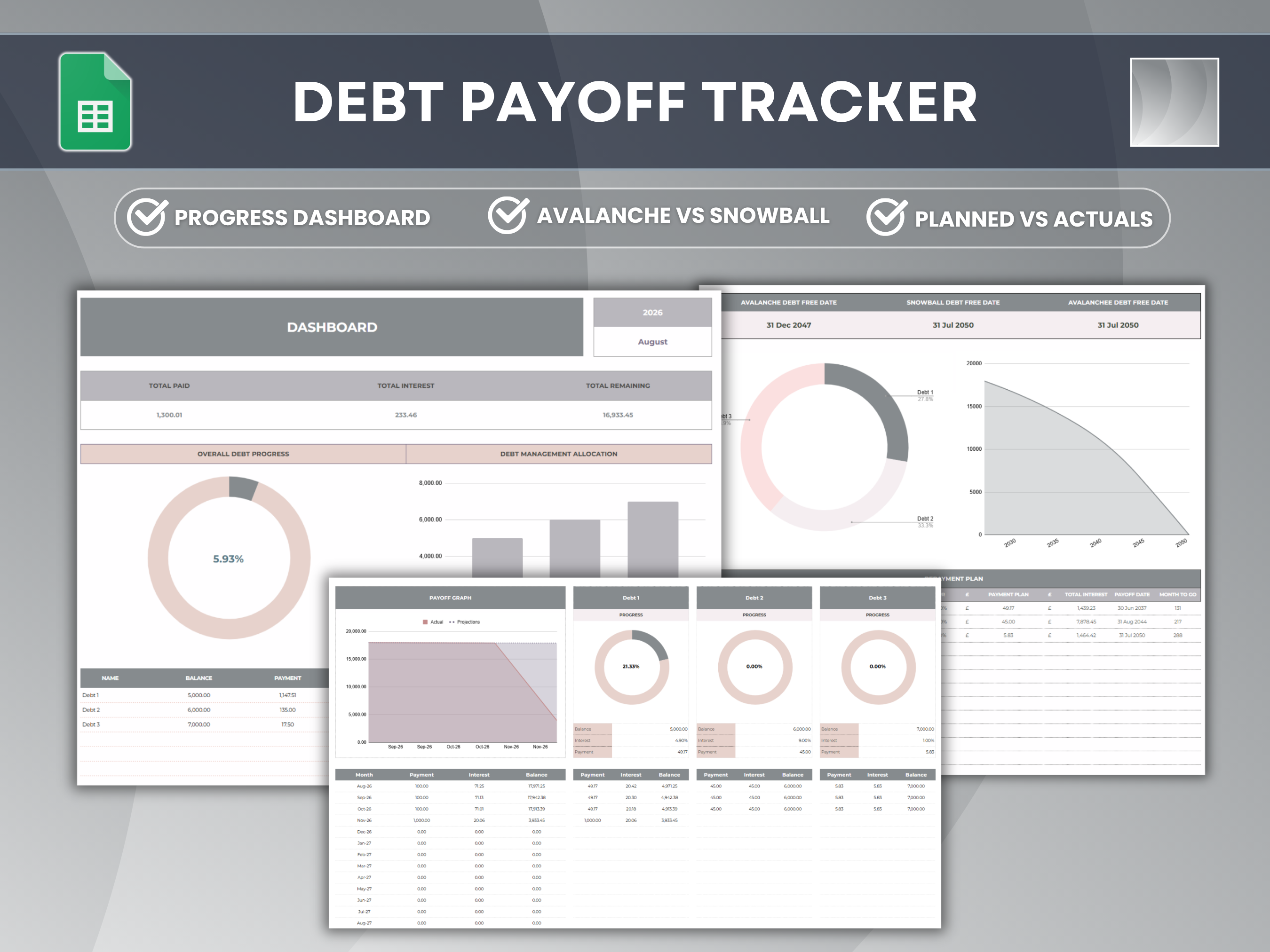
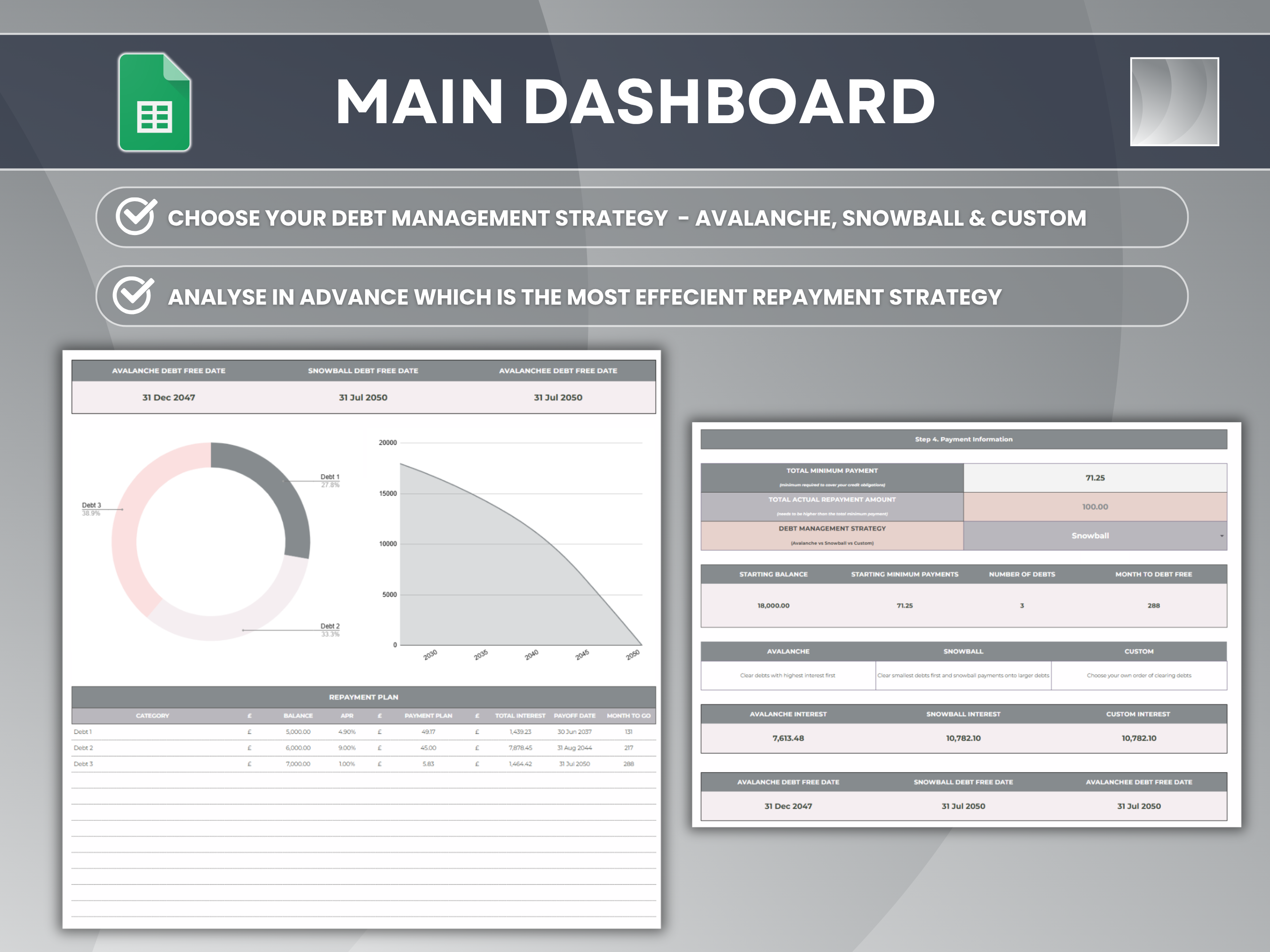
A debt plan is easy to start and easy to lose track of, especially once payments are rolling from one debt to the next. The Debt Payoff Tracker for Google Sheets does the calculation from your own numbers:
- Enter each debt once — name, balance, interest rate and minimum payment.
- Compare snowball, avalanche and your own custom order. The sheet works out the total interest and the debt-free date for each plan, so you can see the trade-off for your own debts before you choose.
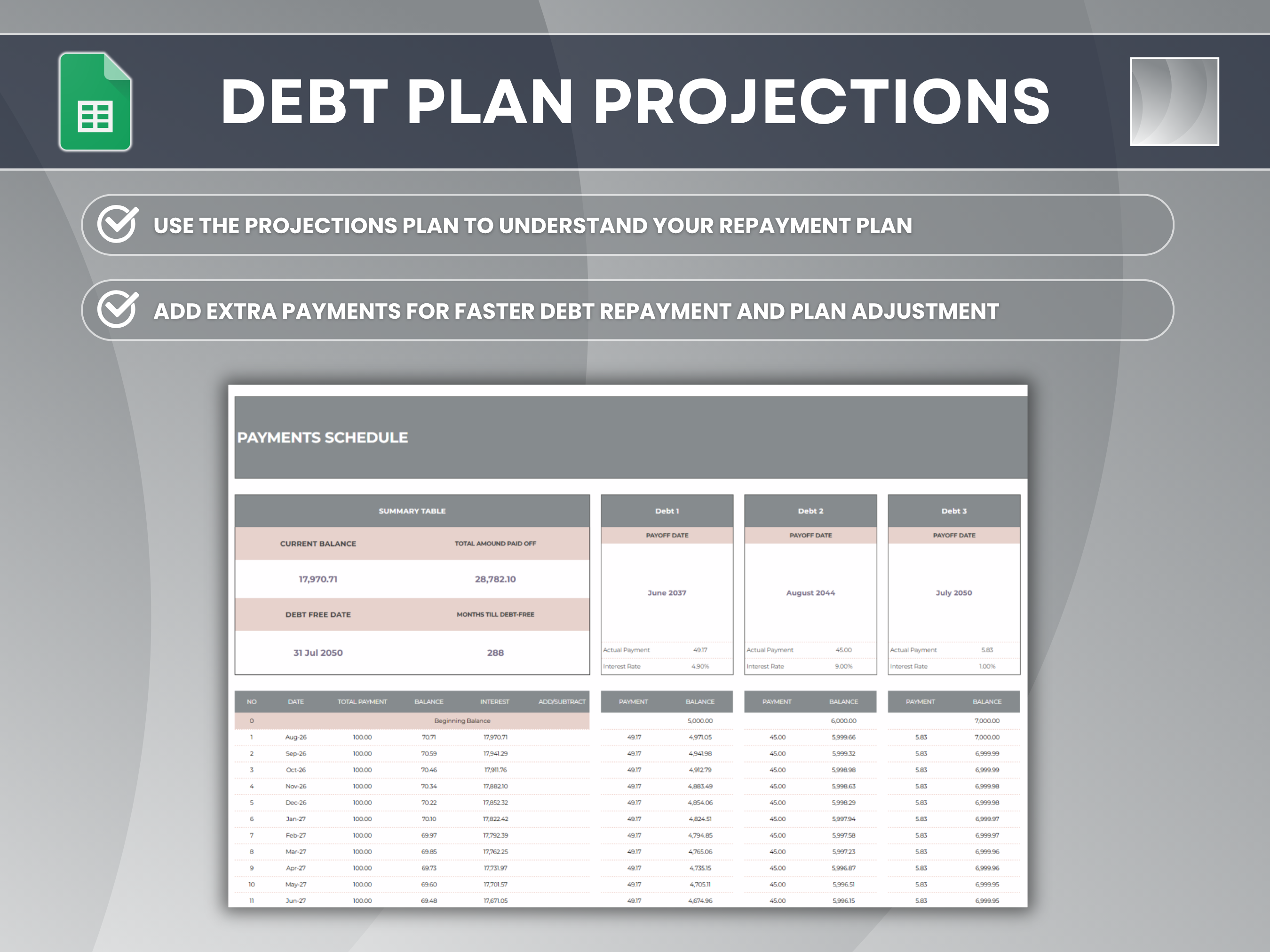
- Add extra payments and the projected payment schedule updates, showing how much sooner you finish.
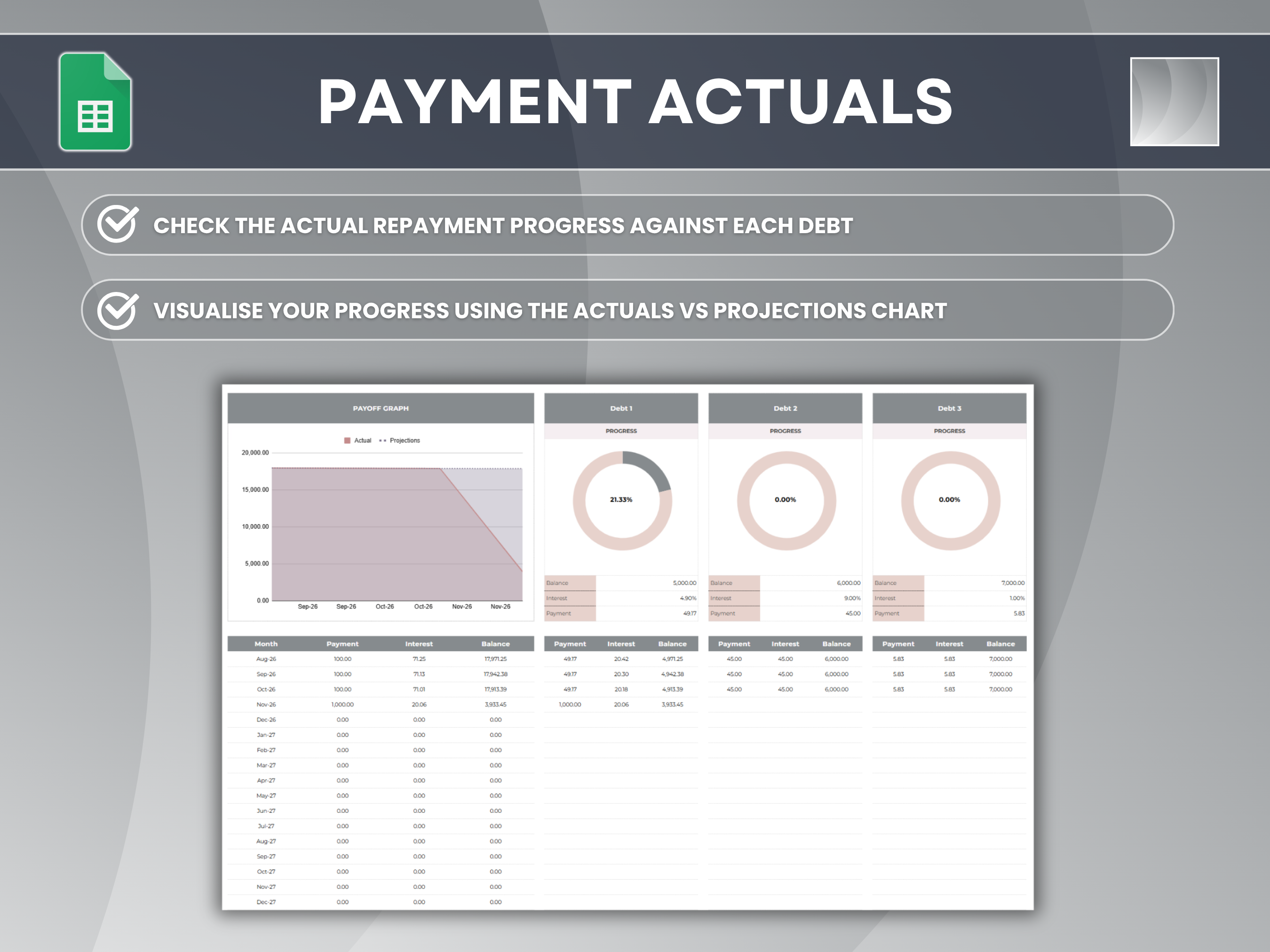
- Log what you actually pay in the contribution tracker. A planned-versus-actual chart for each debt shows whether you are ahead of the plan or behind it.
- A dashboard shows total paid, total remaining, overall progress and your debt-free date at a glance.
It comes with a blank copy for your numbers, an example copy already filled in, a YouTube walkthrough and written instructions. It is a one-off £2.50 purchase, works in Google Sheets on your own account, and has no subscription.
When to get free debt help instead
A payoff plan works when the payments are affordable. If they are not — if you are borrowing to make repayments, missing priority bills, or the minimums alone take more than you can spare — talk to a free debt advice service before choosing a method:
- StepChange Debt Charity
- National Debtline
- Citizens Advice
- MoneyHelper, the government-backed money guidance service
All four are free and confidential. Be wary of companies that charge fees for debt solutions the free services can arrange.
Frequently asked questions
Is the debt snowball or avalanche better?
The avalanche always costs less interest, because the most expensive debt is cleared first. The snowball usually clears your first debt sooner, which helps many people stay motivated. In our £7,000 example, the avalanche saved £36.99 — while either method saved over £4,000 compared with paying only the minimums.
Does the snowball method cost more?
Usually a little, because higher-rate debts wait longer. How much depends on how different your interest rates are. When the rates are similar, the difference is small; when your largest debt also has the highest rate, it can be significant.
What debts should I include?
Credit cards, store cards, overdrafts, personal loans, car finance and buy now pay later. Priority debts — rent or mortgage, council tax, energy and court fines — come first and separately. For most people, income-contingent student loans are better left out, since repayments depend on earnings rather than the balance; whether to overpay one depends on your situation.
Should I save or pay off debt first?
Most people benefit from a small emergency fund first, so an unexpected cost does not go straight back onto a credit card. After that, high-interest debt usually costs more than savings earn, so clearing it is often the better use of spare money.
What about 0% balance transfer cards?
Moving a high-rate balance to a 0% card can cut the interest dramatically, but there is usually a transfer fee of a few percent, and the rate jumps when the 0% period ends. A balance transfer works best alongside a payoff plan that clears the balance before the offer runs out.
How do I work out my debt-free date?
List each debt's balance, interest rate and minimum payment, decide how much you can pay in total each month, and calculate month by month as each debt is cleared. The Debt Payoff Tracker does this for you and shows the debt-free date for snowball, avalanche and a custom order side by side.
Where can I get free debt advice in the UK?
StepChange, National Debtline, Citizens Advice and MoneyHelper all offer free, confidential help. Contact one of them if you cannot afford your repayments, before taking on any new borrowing.